



Vietnam DMC – B2B Destination Management for Travel Professionals
For travel professionals · Operational reference · Updated April 2026
how Vietnam travel actually works

Vietnam DMC for Group Travel, Incentive, MICE, and Ground Handling

Built for groups that cannot afford operational failure.


An inbound operating infrastructure for travel professionals who need routing clarity, supplier coordination, and brand-protected execution across Vietnam — built for incentive groups from 30 to 800+ pax, leisure series departures, and luxury programs across 13 Michelin Key hotels and 9 Michelin-starred restaurants.

LIVE PULSE   Visa: E-Visa 3–4 Days · Capacity: 85% Peak Occupancy · North VN: Cool / Dry
1,200+
Groups Delivered
800+
Travel Partners
20+
Source Markets
4.9/5
Partner Rating
WTA 2026 Nominee Vietnam’s Leading Destination Management Company
50-70 groups monthly
30–350 pax incentive scale
B2B only brand protected
24/7 ops escalation

How complex groups are controlled

How a 120–300 pax Vietnam program actually runs

Large groups do not succeed because each service is booked correctly. They succeed when arrivals, transport, hotels, meals, events, and timing are controlled as one operating flow.

Step 01

Arrival waves

Flights are grouped into handling waves so airport welcome, luggage movement, guides, and coaches stay synchronized.

Step 02

Transfer control

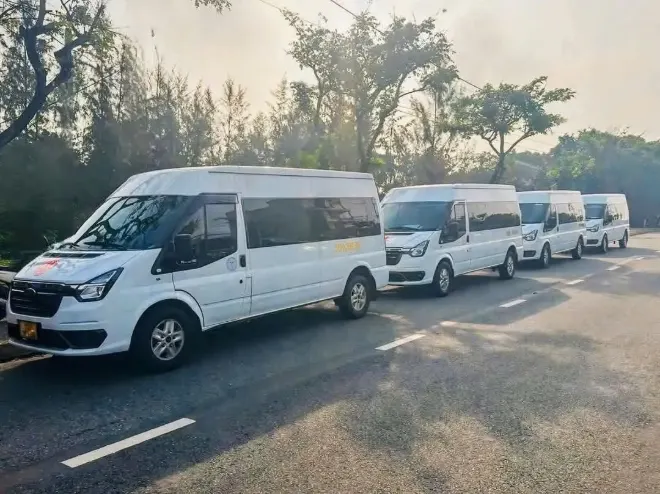
Coach dispatch is planned around flight timing, traffic, hotel readiness, and group size — not only distance on the map.

Step 03

Rooming sequence

Rooming lists, key preparation, luggage tagging, and check-in flow are prepared before arrival to reduce lobby pressure.

Step 04

Daily operating rhythm

Meals, sightseeing, event setup, guide briefings, and transport buffers are aligned so one delay does not break the full program.

The goal is not only smooth service. It is controlled movement.

For incentive, MICE, and large leisure groups, Dong DMC plans the movement logic before pricing, so feasibility is clear before partners commit to clients.

When conditions change

What happens when something goes wrong?

A safe DMC is not the one that promises nothing will change. It is the one that has ownership, escalation, and backup logic before changes happen.

View risk & contingency framework

Most programs don’t fail at planning. They fail when conditions change.

Flight delay

Arrival sequence is adjusted, airport team is updated, and transfer timing is re-coordinated.

Control point: airport + transport + hotel communication.

Traffic disruption

Buffer logic protects downstream meals, events, and check-in timing from cascading delays.

Control point: timing discipline + route adjustment.

Hotel issue

Rooming, key preparation, room changes, and backup options are handled before guests feel the pressure.

Control point: rooming list + escalation owner.

Weather risk

Outdoor plans are paired with indoor fallback options for gala dinners, sightseeing, and movement timing.

Control point: pre-confirmed alternatives.

Why partners choose Dong DMC

Why choosing Dong DMC is safer for travel professionals

The safest DMC is not always the loudest brand. It is the partner that makes risks visible early, protects your client relationship, and controls delivery on the ground.

We control execution

Dong DMC manages supplier coordination, timing, guides, transport, escalation, and field delivery — not only quotation.

We expose constraints early

Peak season, hotel location, coach size, routing fatigue, meal standards, and event feasibility are clarified before commitment.

We protect your brand

Delivery can remain white-label, so your agency stays visible to the client while Dong DMC operates behind the scenes.

We plan before pricing

Programs are shaped around operational reality first, so pricing reflects feasible delivery instead of assumptions.

Chosen by partners who need their clients to trust them — not just the destination.

Safer means fewer hidden surprises.

Share your route, group size, travel window, and hotel level. Dong DMC will first map feasibility, timing risks, and operational fit.

Request planning review

Execution proof

Based on actual delivery across 50–70 groups monthly

How programs were handled under real conditions

Each example shows the market context, operational complexity, and partner feedback after delivery.

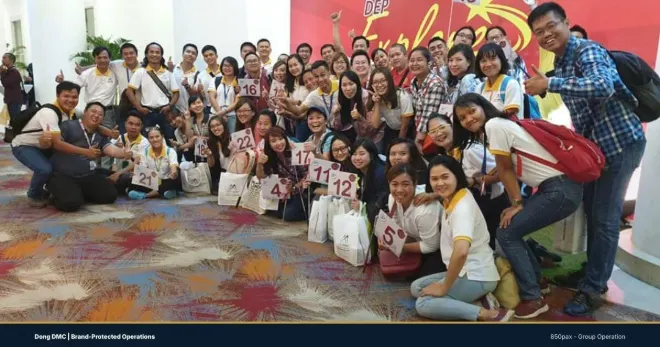
Programs are delivered concurrently across cities during peak season, with routine incentive groups of 80–350 pax and large-scale programs delivered up to 875 pax.

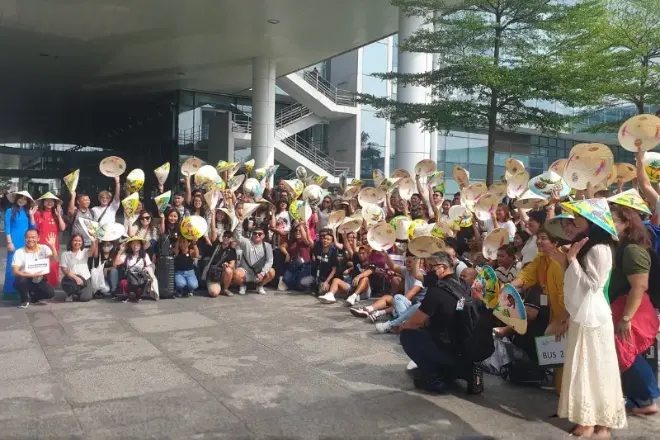
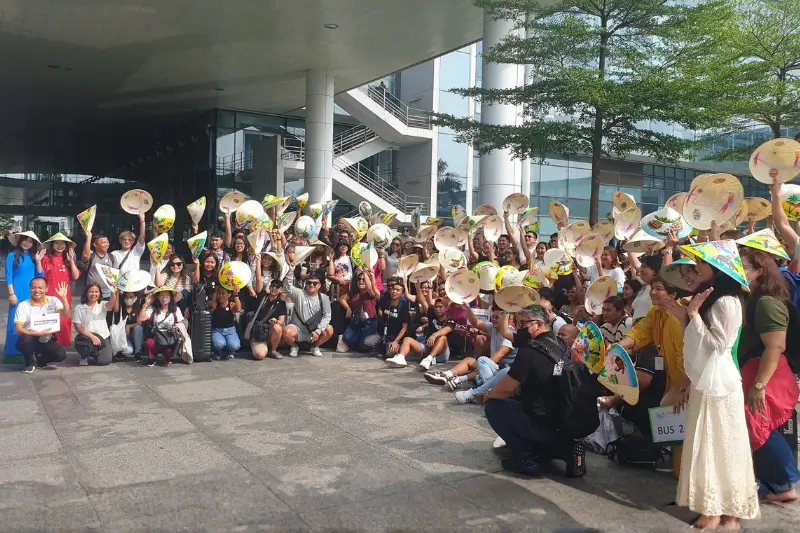
Medchoice Pharma incentive group welcomed at Hanoi airport with traditional conical hats
Airport welcome · Complimentary service · Incentive program
Unilink International

Incentive Group — 85 Pax

When the group landed in Hanoi, Dong DMC had a surprise waiting — a welcome team in áo dài with hand-painted conical hats for every guest, complimentary. Nobody asked for it. The group gathered for photos at the airport, hats in the air, before anyone reached the bus.

Constraint: Peak season, multi-arrival group
Control: Pre-blocked hotels + staggered transfer logic
Outcome: 0 delay, no split group, full program intact
Why it matters Partners remember the DMC that made their clients feel special from the first moment — not just the one that ran on time.

"We were surprised. Thank you, Mickey."

Ms Marie, Unilink
View full execution →
Indonesia leisure series handled in Vietnam
Series departures · Peak season · Repeated groups
Bayubuana Travel Indonesia

Leisure Series — Multi Departures

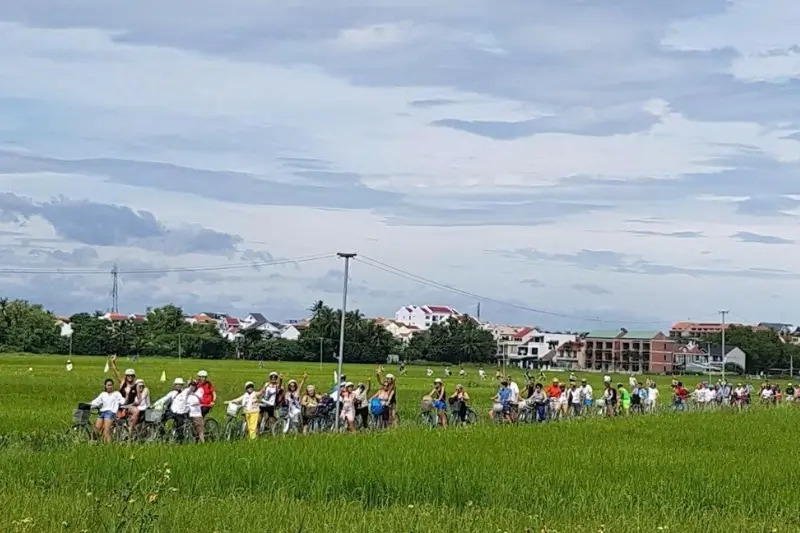
Repeated departures across peak demand with stable routing, hotel allocation, and group handling.

Constraint: Repeated departures during peak demand with consistency required across groups
Control: Standardized itinerary logic, pre-blocked inventory, guide rotation, and halal meal coordination
Outcome: Stable delivery across multiple departures without rebuilding the program from zero each time
Execution context Standardized itinerary logic, pre-blocked inventory, guide rotation, and halal meal coordination.
Why it matters Shows whether consistency can be maintained across multiple groups, not just one successful departure.

“Quick quotes and consistent delivery across every group.”

Bernard, Indonesia partner
View full execution →
Luxury Vietnam Cambodia program with VIP handling
VIP handling · Multi-country routing · Premium service
Logos Tour Europe

Luxury Multi-Country Program

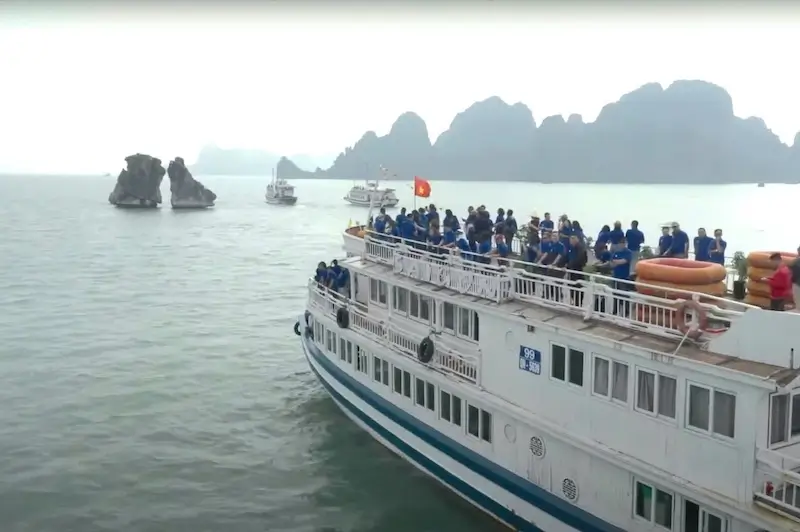
Vietnam–Cambodia routing with VIP handling, private cruise, and service continuity across borders.

Constraint: Premium guests, multi-country routing, and service continuity across suppliers
Control: Fast-track arrival, private transfers, cruise coordination, and cross-border service alignment
Outcome: VIP expectations protected across Vietnam and Cambodia without service fragmentation
Execution context Fast-track arrival, premium transfers, cruise coordination, and multi-country service alignment.
Why it matters Shows how premium expectations are protected when multiple suppliers and jurisdictions are involved.

“VIP handling exceeded expectations — clients were impressed.”

Europe partner
View full execution →

Supporting travel professionals across Philippines, Indonesia, Malaysia, Europe, and other source markets

Rakso Travel Bayubuana Travel Sedunia Travel Logos Tour Panorama Tour

Proof works best when it explains, not just impresses

These examples are most useful when your team needs to evaluate feasibility, timing discipline, service continuity, and delivery confidence before moving into quotation.

What Dong DMC is built to do

A Vietnam operating partner for buyers accountable for delivery

This is not just a website of programs. It is a planning layer for travel professionals who need to understand what is feasible, what affects outcomes, and how execution is controlled.

White-label execution

We operate behind the scenes so your client experience remains under your brand. 

Used when agencies must remain the visible operator to their clients.

Operationally realistic planning

Routing, timing, hotel logic, and on-ground feasibility are considered before confirmation.

Fast quotation workflow

Clear brief in, structured draft out, with assumptions visible and decision points defined. 

Relevant when proposals need to be validated before client-facing commitment

Risk-aware delivery

Contingency, escalation ownership, and supplier coordination are built into delivery planning.

Choose your planning path

Different programs require different operational logic

Start with the type of decision you need to make, then move into the most relevant planning framework.

Group Travel

Series departures and leisure groups for tour operators and travel agencies across Indonesia, Philippines, Malaysia, and Europe — multi-city routing, pre-blocked hotel inventory, guide rotation, and halal meal coordination across Hanoi–Halong, Da Nang–Hoi An, and Ho Chi Minh–Mekong corridors.

Open group travel framework

Incentive Travel

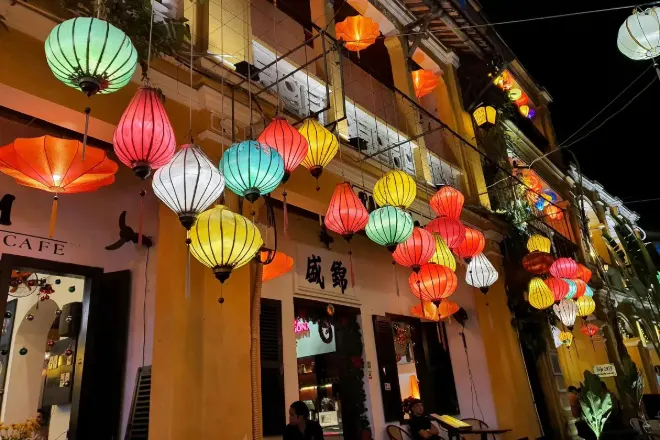
Reward programs from 30 to 800+ pax with áo dài airport welcomes, lantern releases on the Hoai River, and gala production across Da Nang (Ariyana, 2,500 pax), Phu Quoc, and Ho Chi Minh City — wow factor included at no extra charge.

Open incentive framework

Special Interest

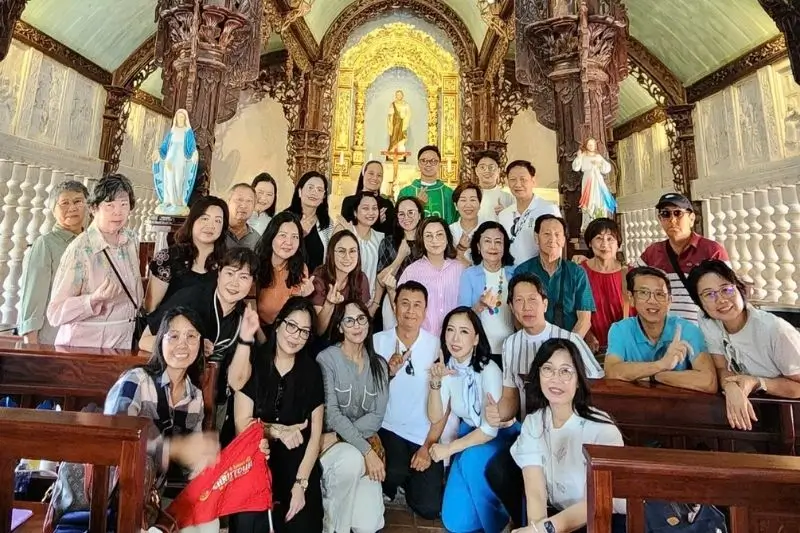
Catholic pilgrimage circuits (La Vang, Phat Diem, Bui Chu), championship golf across BRG Danang, Hoiana Shores, Vinpearl Nam Hoi An, and Ba Na Hills Golf, Cham heritage (My Son UNESCO complex), and Vietnam War battlefield programs (Long Tan, Nui Dat, Cu Chi) — built where operational detail decides the program.

Open program categories

MICE & Corporate Events

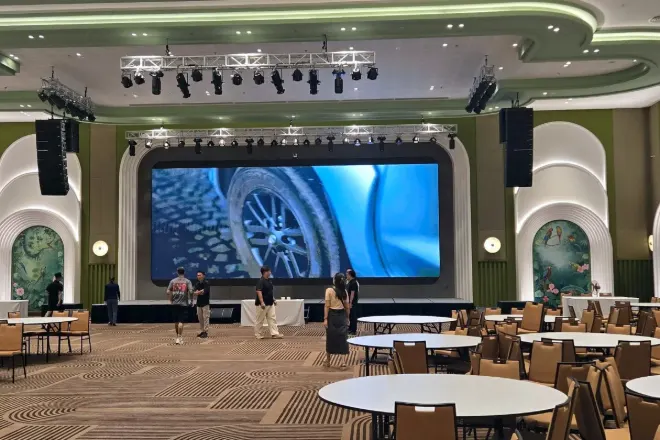
Business events from 50 to 4,000+ pax across named venues — SECC Ho Chi Minh City (40,000 sqm exhibition), Ariyana Da Nang (2,500 pax ballroom), GEM Center HCMC (4,000 pax), and NCC Hanoi (3,500 pax) — with run-of-show control and stakeholder coordination.

Open MICE framework

What affects outcomes

The four variables that shape most Vietnam plans

Group size

Coach allocation, check-in flow, guide deployment, meal handling, and pacing all change with scale.

Travel period

Peak occupancy, domestic holidays, event calendars, and weather shape availability and routing logic.

Program type

Leisure, incentive, pilgrimage, and MICE each require different timing discipline and service structure.

Budget structure

Hotel class, routing complexity, meal standards, transport setup, and event production drive cost.

Execution confidence

How ground handling is controlled

Without coordination, delays most commonly occur at arrivals, hotel check-ins, and event setup.

Buyers rarely need more inspiration. They need confidence that arrivals, rooming, transport, meals, and daily flow will hold together under real conditions.

  • Airport meet-and-assist with fast-track immigration coordination at Tan Son Nhat (SGN), Noi Bai (HAN), and Da Nang (DAD)
  • Coach planning built around Hanoi–Halong, Da Nang–Hoi An, and Ho Chi Minh–Mekong corridor timing — not map distance
  • Hotel rooming coordination across contracted beachfront incentive properties (Nesta Celia Danang Hotel, Pullman Danang Beach Resort, Furama Resort Danang, The Pearl Hoian, KOI Resort) and luxury anchors (Anantara Hoi An, Four Seasons Nam Hai, Paradise Luxury Cruise)
  • Guide assignment with city-specific specialists for Hanoi, Hue, Hoi An, Da Nang, Ho Chi Minh City, and Siem Reap
  • Backup planning for typhoon season (Central Vietnam Sep–Nov), Lunar New Year peak (Jan–Feb), and Ba Na Hills cold-weather demand
View operations reference

Next step

Share the plan. We map feasibility before you commit.

Useful when you need to confirm routing, timing, and operational fit before presenting options to your client.

Low-pressure first step: clarify routing, timing, group structure, and operational fit before pricing.

No commitment required. We clarify feasibility first so your proposal is safe to present.

Operational reference

Frequently asked questions from travel professionals

Common questions from buyers evaluating Vietnam DMC partners before submitting a brief.

A Vietnam DMC (Destination Management Company) is a B2B inbound operator that provides ground-level coordination — supplier contracting, routing, transport, guides, hotel allocation, and on-the-ground execution — for international travel agencies, tour operators, incentive houses, and MICE planners. A DMC works only with the travel trade, not direct consumers. Dong DMC operates under Tour Operator License 79-168/VNAT and has delivered 1,200+ groups across Vietnam and Cambodia for partners in 20+ source markets.

An outbound tour operator packages and sells travel from a source market to a destination. A DMC operates inside the destination, providing ground execution for those tour operators and travel agents. In Vietnam, a licensed DMC holds an International Tour Operator License (the equivalent of Dong DMC's 79-168/VNAT), maintains contracted supplier agreements, and is legally accountable for delivery within Vietnam. A foreign tour operator typically cannot directly contract Vietnamese suppliers or operate ground services without a Vietnam DMC partner.

B2B net rates are wholesale prices issued by the DMC directly to the travel agency or tour operator, with no consumer-facing markup. The agency adds its own margin and sells to the end client at its chosen price. Dong DMC operates 100% on net rates — net invoice to the agency, deposit on confirmation, balance before arrival. There is no commission model, no rate parity with consumer channels, and no direct-to-consumer competition with partners.

White-label execution means the DMC operates behind the scenes while the agency's brand remains visible to the end client at every touchpoint — airport welcome signs, guide introductions, vouchers, and program collateral all carry the agency's logo and identity. Dong DMC supplies branded materials, briefs guides on the partner's positioning, and never identifies itself directly to the end traveler. This protects the agency's commercial relationship and prevents downstream disintermediation.

Dong DMC's hub response time is under 60 minutes for MICE and incentive priority requests, with full structured quotations typically delivered within 12 to 60 minutes for straightforward briefs and 24 to 48 hours for complex multi-city or large-group programs. Quote speed depends on brief clarity — group size, travel dates, hotel level, routing preferences, and meal requirements determine whether feasibility can be confirmed immediately or requires supplier check-back.

Vietnam incentive programs typically range from USD 120 to USD 500+ per person per day on a land-only basis. The 120–200 tier covers 4-star accommodation, group meals, standard coach transport, and basic gala production. The 250–350 tier moves into 5-star beachfront properties, themed gala dinners, and one signature wow-factor experience. The 400–500+ tier supports luxury anchors (Anantara Hoi An, Four Seasons Nam Hai, Paradise Luxury Cruise), private events, and high-production gala formats. Final pricing depends on group size, season, destination, and gala scale.

The Saigon Exhibition and Convention Center (SECC) in Ho Chi Minh City is Vietnam's largest exhibition venue at approximately 40,000 sqm of usable exhibition space. For gala and incentive use, the Ariyana Convention Centre in Da Nang accommodates up to 2,500 pax in a single ballroom and is the largest purpose-built convention facility on the Central Coast. GEM Center in Ho Chi Minh City handles up to 4,000 pax across multiple ballrooms, and the National Convention Centre (NCC) in Hanoi supports up to 3,500 pax for state and corporate events.

Yes. Dong DMC operates as a single-DMC partner across both Vietnam and Cambodia, eliminating the handover between two separate ground operators that typically causes service fragmentation on cross-border programs. Standard routings combine Ho Chi Minh City or Hanoi with Siem Reap (Angkor Wat) and include visa coordination, cross-border transport (land or air), and continuity of guide handling. This is particularly relevant for luxury FIT and incentive programs where VIP expectations must be protected across jurisdictions.

Dong DMC handles incentive groups from 30 pax up to 800+ pax, with the routine operating range across 50–70 groups monthly. The largest single-program delivery on record is 875 pax. Smaller groups (20–80 pax) operate with single-coach logistics and tighter guide ratios; mid-scale (80–350 pax) is the most common incentive band and uses staggered arrival waves, pre-blocked hotel inventory, and multi-coach dispatch; large-scale (350–800+ pax) requires venue-anchored programs at Ariyana Da Nang, GEM Center, or NCC Hanoi with dedicated arrival management.

Dong DMC maintains contracted supplier agreements with named hotel partners across Vietnam — including beachfront incentive properties (Nesta Celia Danang Hotel, Pullman Danang Beach Resort, Furama Resort Danang, The Pearl Hoian, KOI Resort), luxury anchors (Anantara Hoi An, Four Seasons Nam Hai, Paradise Luxury Cruise), and 40+ contracted properties across the three regions. Transport governance covers vetted coach fleets, private vehicles, and air-charter coordination. Each supplier has an escalation owner inside Dong DMC's operations team, so service issues route to a named coordinator rather than a general inbox.

Vietnam has three climate zones operating on different calendars. The North (Hanoi, Halong, Sapa) is best October to April, with cool dry conditions; Sapa in December–February offers cold-weather highland appeal for tropical-market groups. Central Vietnam (Da Nang, Hoi An, Hue) is best February to August; September to November is typhoon season with elevated weather risk. The South (Ho Chi Minh City, Mekong, Phu Quoc) is best November to April (dry season), with May to October being the rainy season but still operationally viable. Peak demand windows include Lunar New Year (January–February) and Christmas–New Year, when hotel inventory tightens significantly.

Dong DMC operates a 24/7 regional ops hotline during live program delivery, with named escalation owners assigned to each program. Typhoon scenarios in Central Vietnam are handled through pre-confirmed indoor fallback venues for galas and sightseeing, plus rerouting logic that shifts itineraries north or south depending on storm path. Traffic disruption is buffered through corridor-based timing (not map-distance scheduling) on Hanoi–Halong, Da Nang–Hoi An, and Ho Chi Minh–Mekong routes. Hotel issues — overbooking, room standard mismatch, late check-in — are managed through pre-prepared rooming lists, key preparation, and backup property holds established before arrival.